Lower corrosion rates reported with repeated Krown T40 application in the investigated laboratory regimen.
Reapplied each exposure cycle, equivalent to about 19 applications/year. This is not a result established for one annual treatment. Separate panel testing also found localized attack.
The report’s literature review includes Krown among better-performing products in earlier carbon-steel / magnesium-chloride testing. Its product inventory describes annual application.
A synthesis citing prior research, including the 2013 work; not a new independent Krown trial.
Historical records; preventive maintenance excluded. These are repair-cost shares, not savings delivered by Krown. WA-RD 796.1, printed p. 90.
Protection at your location
Your yard. Our expertise. Less running around.
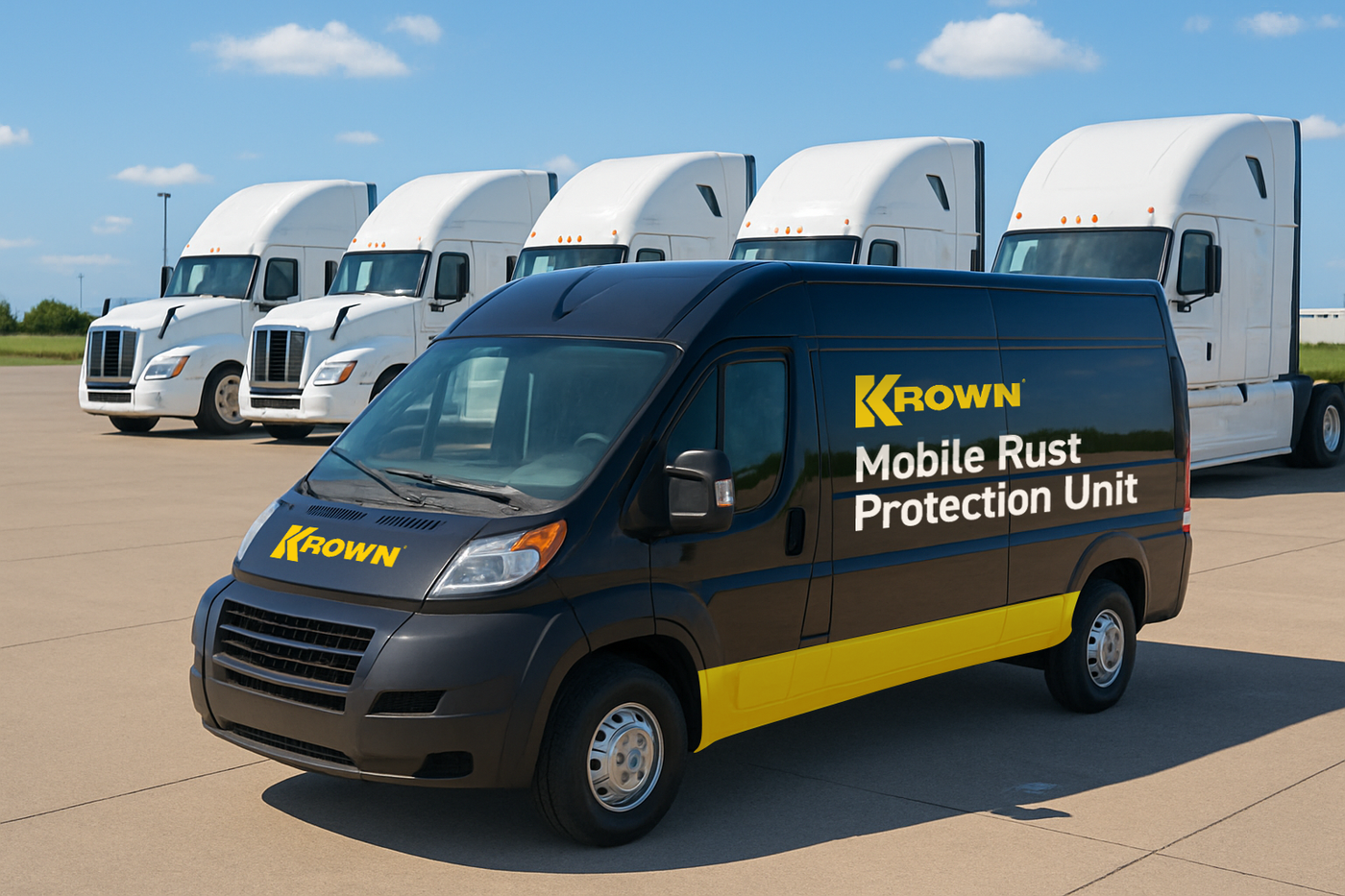
Bring Krown mobile rust protection to your operation. Explore on-site application for fleet vehicles and heavy equipment, with a plan for vehicle access and service timing.
Discuss the equipment you operate
Plan around your service windows
Confirm local mobile availability
Mobile service is subject to participating locations, site suitability and equipment access. Your Krown team can confirm the details.
See protection put to work.
A closer look at the products, the application and the maintenance behind a Krown fleet program.
See how Krown is applied to the working parts of a heavy-duty vehicle.
Different jobs. The same need to protect.
Keep the focus on your working assets. Match the application and service plan to your vehicles, equipment and operating conditions.
Transport & logistics
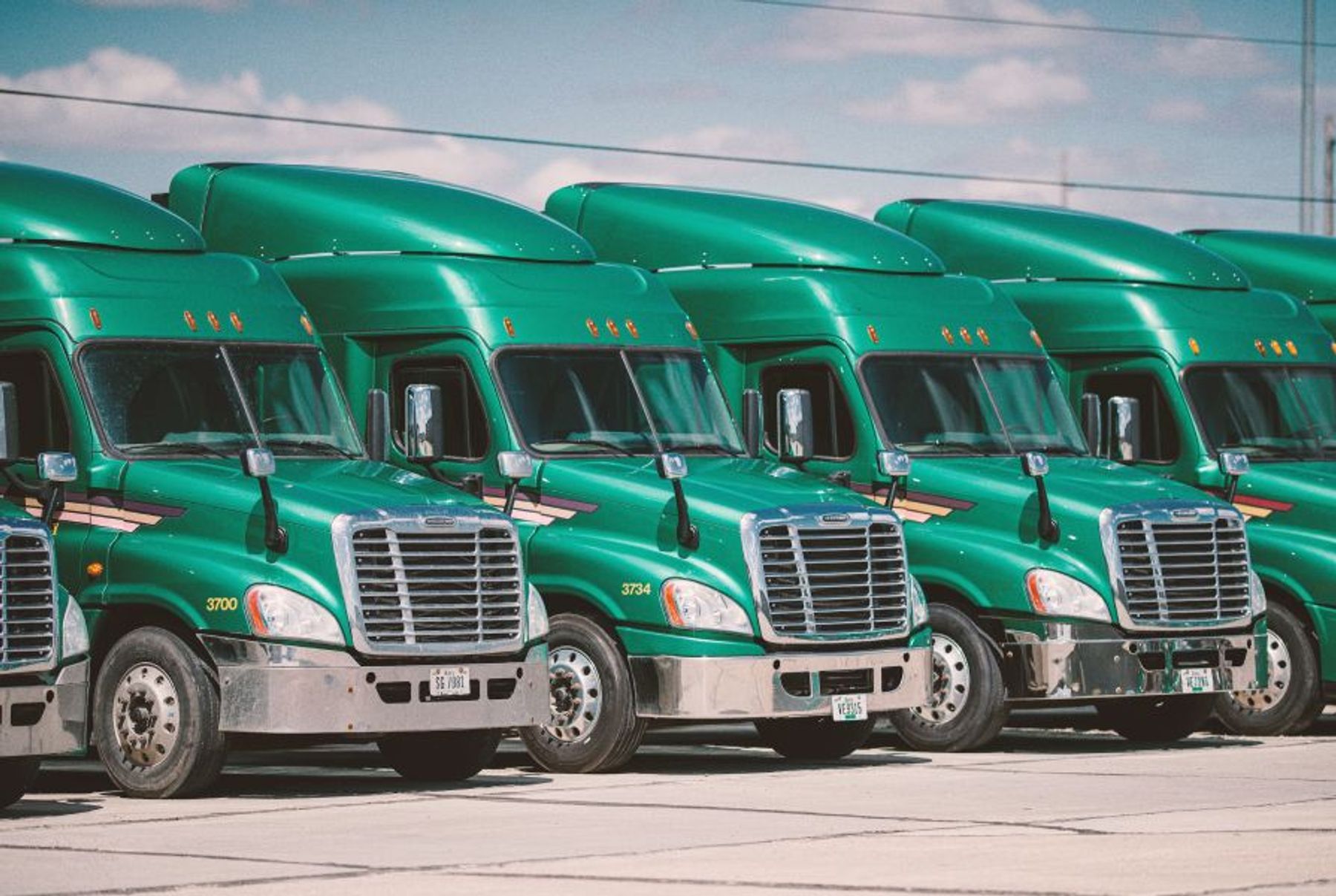
Tractors, trailers, delivery and vocational vehicles.
Municipal & road maintenance
Snowplows, spreaders, public works and utility fleets.
Emergency services
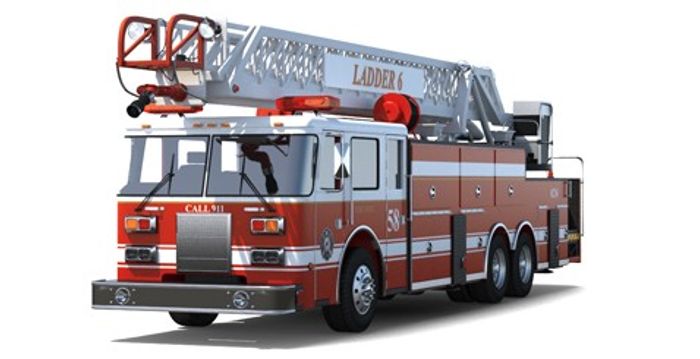
Fire, ambulance and rescue vehicles.
Agriculture & heavy equipment
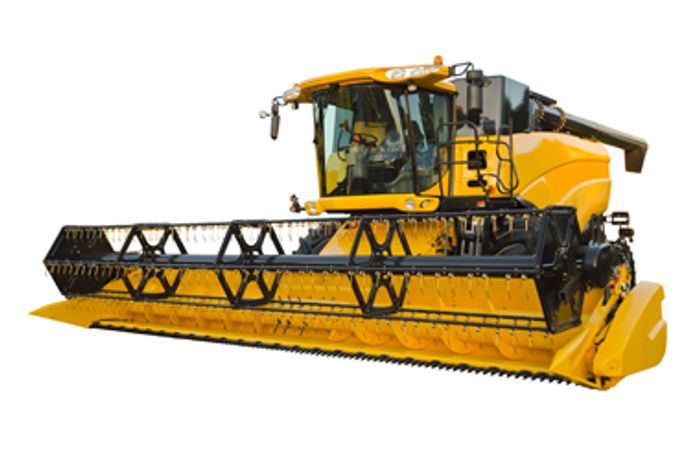
Tractors, combines, sprayers and implements.
Your fleet. Its next chapter.
Let’s talk about what you operate, what it faces and how a Krown rust protection program could fit. A practical conversation, built around your business.
A fleet consultation. A plan for your operation.
Good questions. Practical answers.
How does Krown protect a working fleet?
Krown’s penetrating rust protection is designed to reach seams, joints and hidden areas, displace moisture and lubricate moving parts. Your fleet program can address structural components, electrical connections and other exposed areas, alongside washing, inspection and repairs.
How often should we schedule treatment?
Krown recommends annual application. Discuss your vehicles, exposure and maintenance cycle with the local team to plan appropriate treatment and follow-up.
Can you treat our fleet at our location?
Mobile service can bring rust protection to your operation. Availability depends on your location, the participating Krown team, site suitability and access to your equipment. Ask us to assess your setup.
How much time and budget should we allow?
Request a fleet-specific quote and service window. Vehicle size, condition, access, location and the work involved affect pricing and timing. The research figures on this page are not a quote or a forecast of your fleet’s savings.
What about electric vehicles and manufacturer warranties?
Tell your Krown team which vehicles and equipment you operate. Confirm the appropriate application procedure and review the relevant manufacturer’s guidance and warranty terms for each vehicle.
The detail behind the decision.
Read the original publications and the context behind every research figure on this page.
Washington State DOT2013 · Laboratory research
Krown T40 reduced corrosion rates by at least 99% under a repeated-application laboratory regimen. Reapplied each exposure cycle, equivalent to about 19 applications a year; this does not establish annual-service performance. A separate panel test found localized attack despite lower average corrosion.
WA-RD 796.1 · printed pp. 11, 32, 36–41, 67, 89–90
The literature review identifies Krown among better-performing products in earlier carbon-steel / magnesium-chloride tests. Its product inventory describes annual application. This cites prior research; it is not a new independent Krown trial.
369 light-duty vehicles: 228 Krown T40-treated and 141 comparison vehicles. Different vehicle groups and histories mean the observed differences do not prove causation or predict heavy-duty fleet results. Krown centres were acknowledged research partners; repair savings were not measured.
The review reports that only Krown T-40 met every established property limit among seven products evaluated by QETE. It documents annual application to approximately 2,750 light support wheeled vehicles. Historical results do not certify current formulations or establish fleet savings.