369
Vehicles in the study
228 Krown T40-treated vehicles and 141 comparison vehicles, spanning different makes, models, and ages.
Ontario sampling, 2014–2016; treated does not exclude all other aftermarket methods.Methods, Section 2 [1]
You count on your car every day. University of Windsor researchers measured less corrosion on Krown T40-treated vehicles in a study of everyday light-duty vehicles.
A 2022 observational study, using vehicles sampled in Ontario during 2014–2016. Group averages do not predict your car’s results, prove causation, or constitute a University of Windsor endorsement.

University of Windsor authors · Published in Materials · April 22, 2022 · 369 vehicles · DOI: 10.3390/ma15093053
Researchers compared corrosion on 228 vehicles treated with Krown T40 and 141 comparison vehicles with no aftermarket corrosion protection. Treated vehicles had lower average measured corrosion across body panels, underbody parts, and the two combined.
These were different groups of vehicles, not a randomized trial or before-and-after test of the same cars. The comparison group included vehicles at auto recyclers as well as service customers. Vehicle history and other differences may influence the results.
Illustrative Krown brand photography.
A car can look good from the outside while corrosion develops in seams, rocker panels, and underneath. The study examined the kinds of body and underbody parts that matter to ordinary vehicle owners—not just metal coupons in a laboratory.
“the aftermarket-treated vehicles have statistically significantly less corrosion than the untreated vehicles”
Sawyer-Beaulieu, Tam & Hussein (2022), abstract. Read in full [1]
The ratios below compare the groups’ average Corrosion Index: measured visible corrosion on the selected parts. They are not repair savings, a percentage of rust prevented, or a guarantee for an individual car.
369
228 Krown T40-treated vehicles and 141 comparison vehicles, spanning different makes, models, and ages.
Ontario sampling, 2014–2016; treated does not exclude all other aftermarket methods.Methods, Section 2 [1]6.8×
Mean Corrosion Index: 239.6 cm² without aftermarket treatment, compared with 35.2 cm² in the Krown T40-treated group.
Relative group means · treated group = 1
3.6×
Mean Corrosion Index: 1,233 cm² without aftermarket treatment, compared with 342.0 cm² in the Krown T40-treated group.
Relative group means · treated group = 1
Annual corrosion protection belongs in the long-term care of your car. Its maintenance value lies in protecting parts from corrosion-related deterioration and limiting your exposure to costly repairs as the vehicle ages.
$20,000
Assumed trade-in value in the better condition compared · Canadian dollars
$1,000–$5,420Illustrative overall-condition value difference
Rust protection could preserve only part of that difference. Its contribution has not been measured.
Hypothetical trade-in comparison · Canadian dollars
Assume the vehicle has a trade-in value of $20,000 in the better condition shown in each row. In an interview published by Farmers, Kelley Blue Book managing editor Matt DeLorenzo describes a 5–10% decline per condition step. Here is that rule of thumb applied with each reduction compounded on the remaining value.
| Condition comparison | Approximate decline | Value difference |
|---|---|---|
| Good → Fair | 5–10% | $1,000–$2,000 |
| Very Good → Fair | 10–19% | $1,950–$3,800 |
| Excellent → Fair | 14–27% | $2,850–$5,420 |
$20,000 × 0.90 × 0.90 × 0.90 = $14,580. At three successive 10% reductions, $20,000 in Excellent condition becomes $14,580 in Fair condition: a $5,420 difference.
Rust protection may contribute to preserving only part of that difference; its share has not been measured. Mechanical condition, interior wear, tires, history and the market also affect value. These gross differences are neither demonstrated Krown savings nor net returns: treatment costs have not been deducted.
Read the KBB editor’s rule of thumb · FarmersUniversity of Windsor researchers compared 228 Krown-treated vehicles with 141 vehicles without aftermarket corrosion treatment. Inspected underbody parts included crossmembers and control arms.
Group averages · 2014–2016 data · published in 2022
Read the Windsor studyThe Automobile Protection Association identifies corrosion concerns involving brake, fuel and air-conditioning lines, tanks, electrical connections and body panels.
Read the APA guidanceSeized or corroded parts can require additional work. FCA service guidance specifically recognizes extra operations for drilling or extracting bolts and for seized or corroded parts.
Read the FCA guidance · page 1Rust is a vehicle-condition indicator explicitly recognized by Kelley Blue Book. Its higher condition ratings require no rust; lower ratings allow cosmetic rust or repairable rust damage. Overall condition matters to resale value.
Read Kelley Blue Book’s condition criteriaStart with your vehicle’s condition. Discuss its age, use and road-salt exposure with your Krown team, then get a local protection quote.
Windsor measured visible corrosion, not repair bills. The study was observational: treatment was not randomly assigned, and the untreated group included end-of-life vehicles from recyclers. Differences in recruitment and vehicle history may affect the comparison. Corrosion ratios cannot be converted into percentage savings.
The trade-in differences are calculated scenarios based on a rule of thumb reported by Farmers, not published KBB averages or an appraisal of your car. The $20,000 baseline is a Canadian-dollar assumption. Each row is a separate comparison starting at $20,000; the differences must not be added together. No comparison below Fair condition is used. Windsor, FCA and APA do not establish the share of value preserved by Krown.
Illustrative overall-condition differences, not a Krown savings promise. Individual values and results will vary.
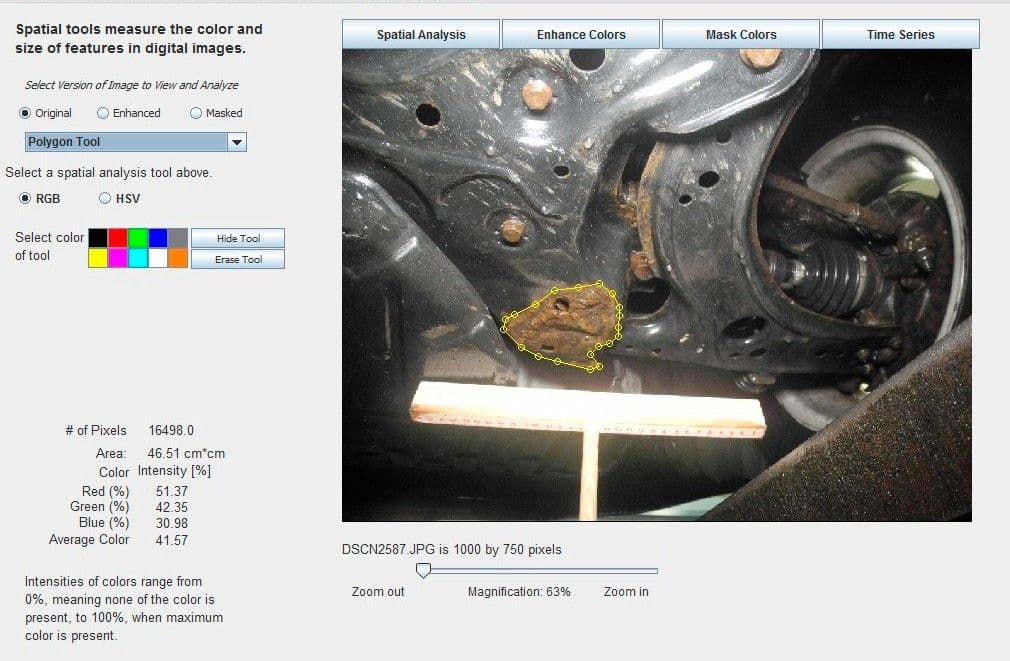
Researchers photographed corrosion-prone parts, used a ruler to establish scale, and outlined visible corrosion in image-analysis software. They combined the measured areas into a Corrosion Index. This measured visible area, not remaining metal thickness, vehicle safety, or repair cost.
For vehicles up to four years old, the study did not detect a statistically significant difference between the groups. For the 5–8, 9–12, and 13+ year age groups, the treated group had significantly less measured corrosion.
That does not establish an ideal age to begin treatment or mean every older car will respond the same way. The study found that corrosion increased with vehicle age in both groups.
See the age-group analysis: Section 3.2, Figure 7 and Table 3 [1]
Start with your own car.
Use the findings to have a practical conversation about your vehicle, its condition, and the care it needs.
Ask about corrosion-prone seams, rocker panels, and underbody components. The study’s 17 target part types included doors, fenders, crossmembers, and control arms.
Tell your Krown team about your daily driving, winter road exposure, storage, and maintenance history. The paper identifies these as factors warranting further investigation; it does not prove that all were controlled.
The authors note that aftermarket protection often requires periodic maintenance and renewal. Ask your local team about a suitable service plan rather than treating the study as a universal application schedule.
Illustrative Krown service photography.
You do not need to be a fleet manager to ask good questions about corrosion. Bring your vehicle’s history and your plans for keeping it. Your local Krown team can explain the service and discuss options for your car.
A short explanation of how corrosion was measured, what the group comparisons show, and what they cannot tell us.
Video explainer coming soon. Until then, explore the findings and read the open-access study.
One car. Your daily routine. Learn about Krown rust protection and discuss the care that suits your vehicle.
Yes. The treated group consisted of vehicles that had received Krown T40 “Rust Protect.” Some had also received another aftermarket protection method. Among the Phase II survey respondents, about 7% reported another method alongside Krown. See Section 2 and Figure 1.
No. It is the reported ratio of average measured body-panel Corrosion Index between the groups. It is not a vehicle-lifespan multiplier, a repair-cost result, or a guarantee for your car.
No. They sampled existing treated and comparison vehicles. The comparison group included high-salvage end-of-life vehicles at recyclers and vehicles at Krown locations for first-time treatment or other services. Sampling vehicles is not the same as randomly assigning treatment.
It means no aftermarket corrosion protection. These vehicles still had their original manufacturer-applied corrosion protection; it does not mean bare, unprotected metal.
The study does not establish when an individual owner should begin treatment. It found no statistically significant group difference at up to four years old and significant differences in the older age groups. Ask about your own vehicle and circumstances.
The article was written by University of Windsor researchers and published in Materials in 2022. Its findings are not an official university endorsement, certification, or guarantee. Krown facilities are acknowledged among the industrial partners that supported the research.
This was an observational comparison and a study of a measurement method, not a controlled treatment trial. Different recruitment sources, vehicle histories, some combined treatments, and manual image interpretation can affect the results. The Corrosion Index measures visible area on selected parts and used equal weighting for different corrosion categories. It does not establish structural safety, repair savings, or an individual vehicle’s future results.
This is a Krown marketing summary of one peer-reviewed paper. The links below are access points and disclosures for the same study, not separate independent replications.
Sawyer-Beaulieu, S.; Tam, E.; Hussein, A. Measuring Corrosion on Vehicles, in Real-Time, Using Digital Imaging and Analysis Techniques. Materials 2022, 15(9), 3053. Published April 22, 2022. DOI: 10.3390/ma15093053.
Key locations: Section 2 for sampling and treatment definitions; Table 1 for parts; Figure 4 for image measurement; Section 3.1, Figure 6 and Table 2 for overall comparisons; Section 3.2, Figure 7 and Table 3 for age groups; Section 4.1 for error sources.
The same paper is freely available in PubMed Central. The PubMed record provides its abstract and publication identifiers: PMID 35591387; PMCID PMC9105723.
The paper reports NSERC/OCE Engage–VIP I and OCE AUTO21 Automotive Practicum funding. Acknowledged industrial partners include two auto recyclers and three Krown facilities. The authors declare no conflict of interest and state that funders had no role in study design, analysis, interpretation, manuscript writing, or the publication decision. Vehicle-level data are not publicly available because of proprietary images and associated owner information.
The measurement image is the paper’s original Figure 4, © 2022 the authors, reproduced under CC BY 4.0 without alteration. Other photos come from Krown’s brand library and are illustrative; they are not evidence of individual study results or identified study participants.